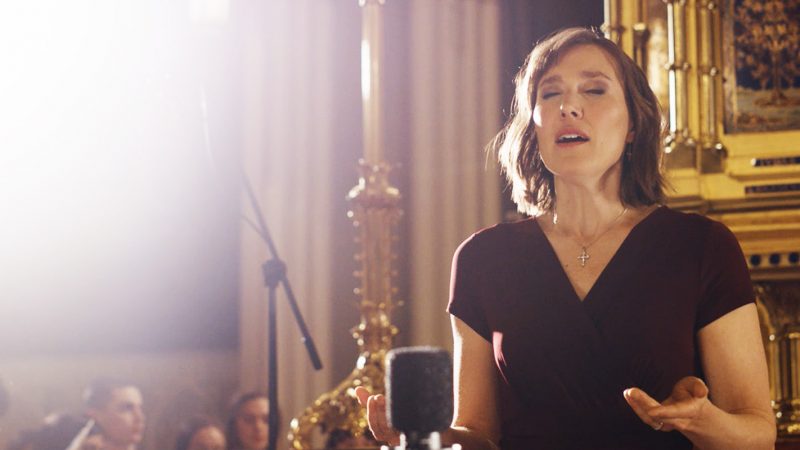
“Be Thou My Vision” began as an Irish poem, dating back as early as the 8th century. The text was translated by Mary Byrne, a Dublin native and Irish scholar. The hymn as we know it today was published in 1912 by Eleanor Hull. The melody of “Be Thou My Vision” is a traditional, Irish folk tune called “Slane”. Enjoy the lovely voice of Hannah Martin in a rendition of this classic hymn.
-
The Dark is Not Your Home
Taylor Tripodi’s moving “The Dark is Not Your Home” speaks to anyone who feels trapped in darkness. God did not create you for darkness and, even in the midst of pain, he calls you. This song speaks to His love, tenderness, and gives us all courage to step out of the dark into our true home with the Lord.
-
What Wondrous Love Is This
“What Wondrous Love Is This” (often just referred to as “Wondrous Love”) is a Christian folk hymn, performed here by Madeleine Puschautz. Its text was first published in 1811, during the Second Great Awakening, and its melody derived from a popular English ballad. Today it is a widely known hymn included in hymnals of many Christian denominations.
-
Crown Of Thorns
“Crown of Thorns”, composed by Danielle Rose and arranged by J.J. Wright, is performed here by Danielle Rose and the Notre Dame Folk Choir.